







Implementasi dan dukungan langsung di Indonesia, oleh tim yang memahami perbankan lokal.
Mario Robertus, Global Infotech · mario.robertus@global-infotech.co.id · +62 813 1929 1175
Recovery isn't leaking because your agents aren't working. It's leaking between systems.
Indonesian banks carry more delinquent accounts per collector every year, across a branch network spread over thousands of kilometres. The teams work hard. The systems underneath them were never built to run collections at that spread.
The collections module includes
Every pain above has an owner in the module, not a roadmap item.
Dynamic risk bucketing
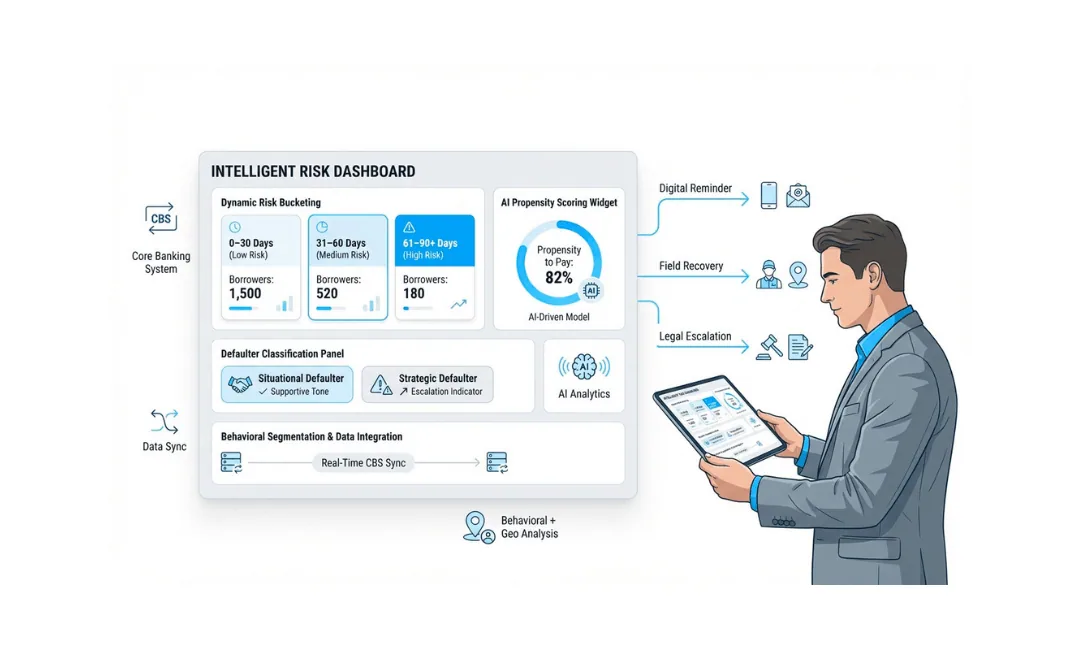
Bucket overdue accounts by DPD using payment behaviour, location and propensity models, separating situational from strategic defaulters so the recovery strategy fits the borrower.
Omnichannel digital nudging
Automated soft reminders across WhatsApp, SMS and email in Bahasa Indonesia, with embedded payment links that let early-stage borrowers self-cure.
Field force monitoring app
Route optimisation, live tracking, and document or photo capture on the doorstep, designed for agents covering dense urban routes and multi-island branches alike.
Automated escalation workflows
Demand notices, final warnings and settlement checklists generated from templates your own legal and compliance teams approve, configured to Indonesian process during setup.
No-code collection configurators
Define recovery rules per portfolio, from secured KPR mortgage and KKB auto to unsecured KTA and credit card, without waiting on a development cycle.
Flexible deployment options
On-premises, sovereign cloud or air-gapped, so customer data stays inside the boundary your data-residency and OJK obligations require.
The 4-stage intelligent recovery journey
Every overdue account moves through the same four stages. What changes is the tone, the channel, and who owns it — automatically, as the account ages.
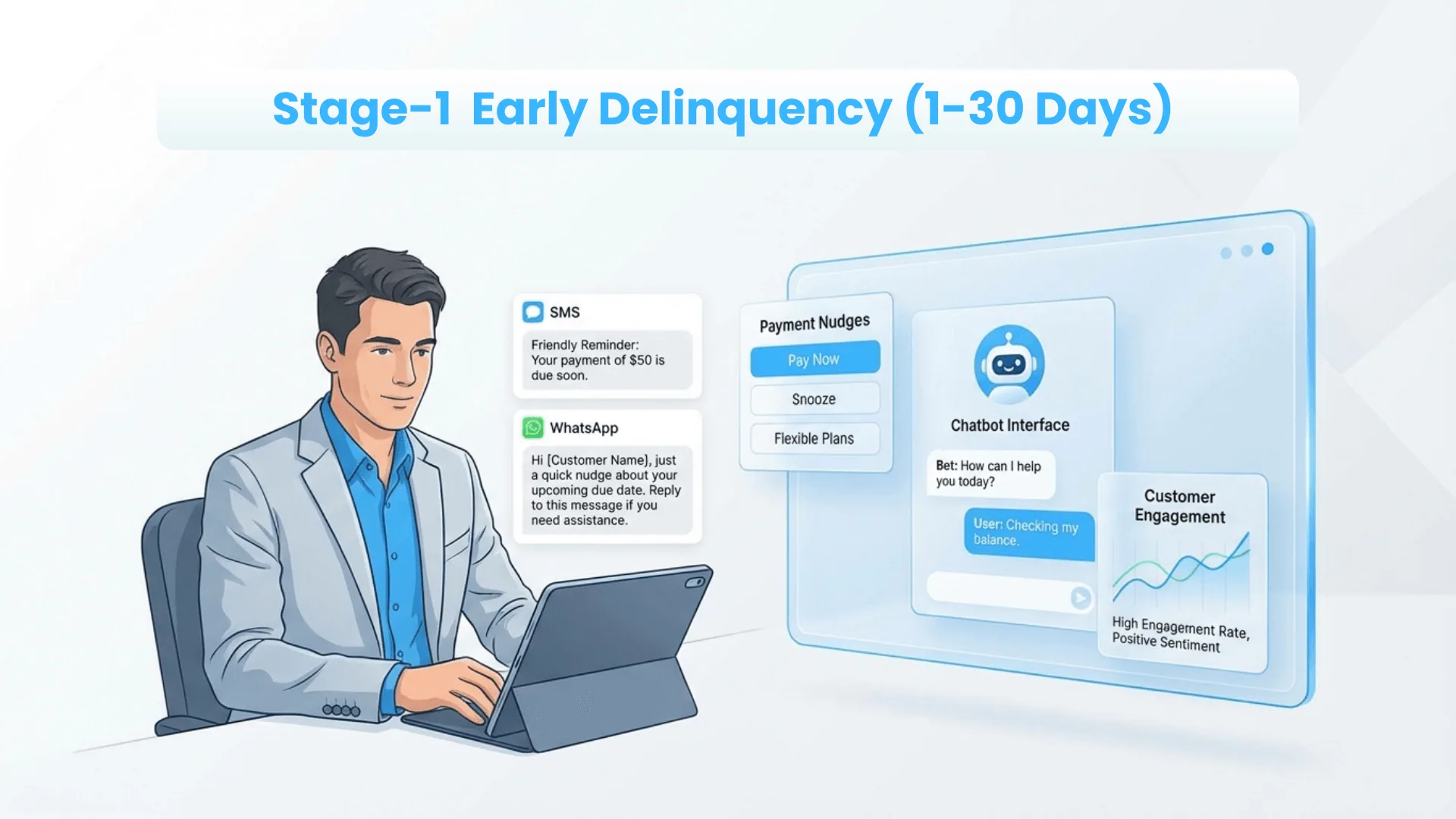
Early delinquency — self-cure
Non-coercive reminders over WhatsApp, SMS and email with an embedded payment link. Most situational defaulters clear here without an agent ever dialling.
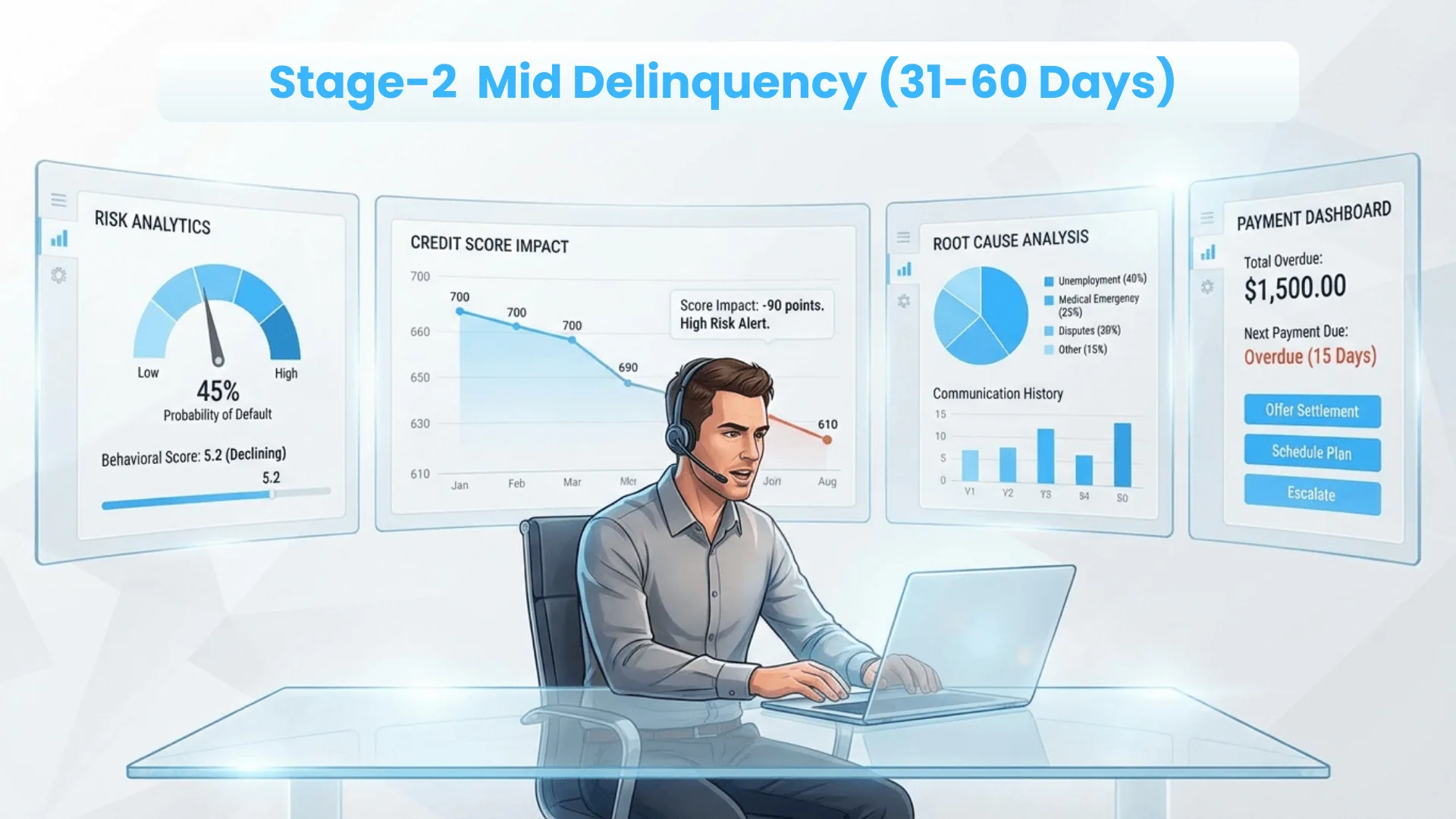
Mid delinquency — assisted recovery
Propensity scoring routes the accounts worth a human call to the right agent, with Borrower 360° open and the tone stepped up a level.
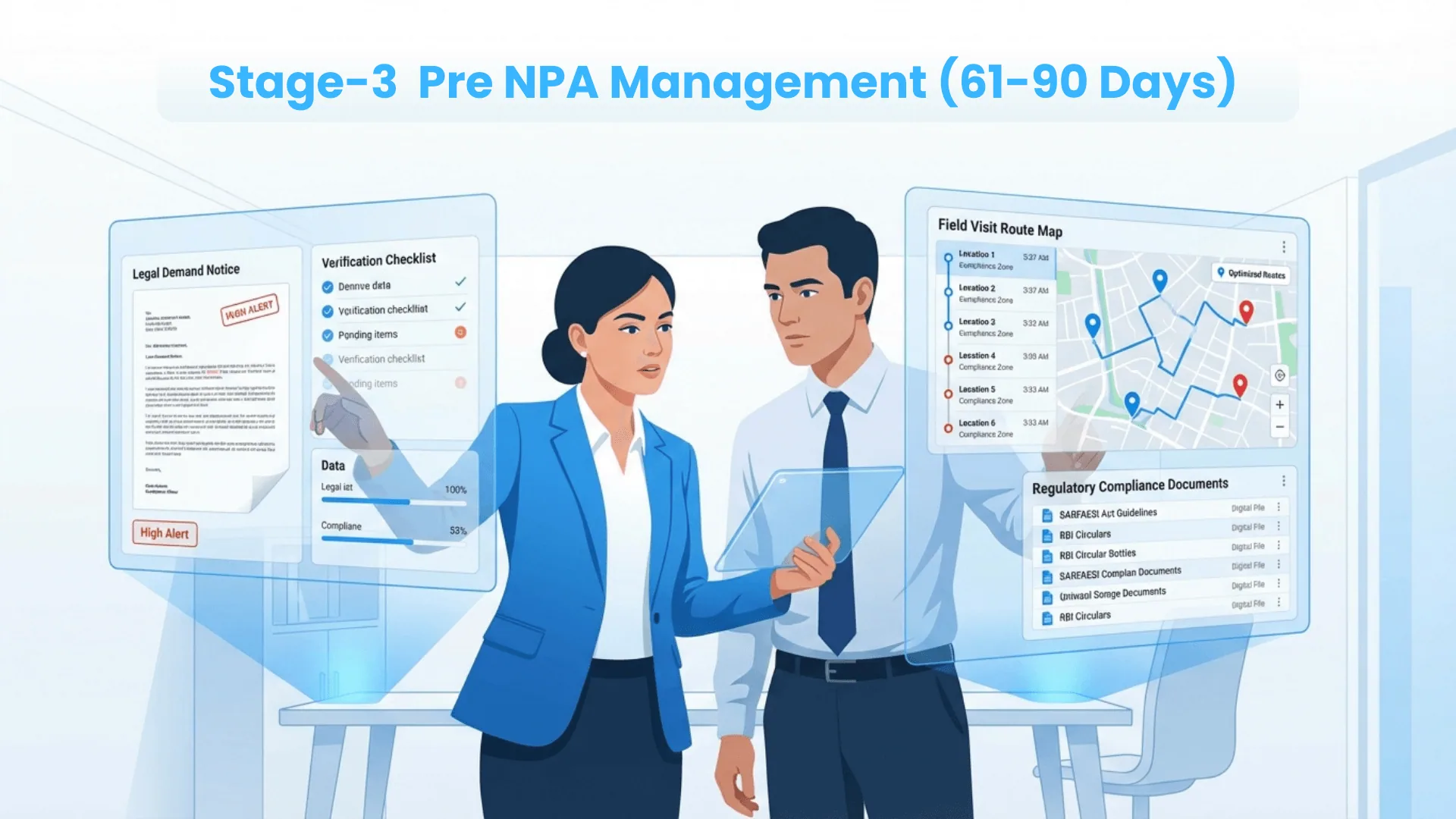
Pre-NPL — field and restructuring
Field visits are routed and geo-tagged, restructuring options are put on the table, and every promise to pay is tracked to its date.
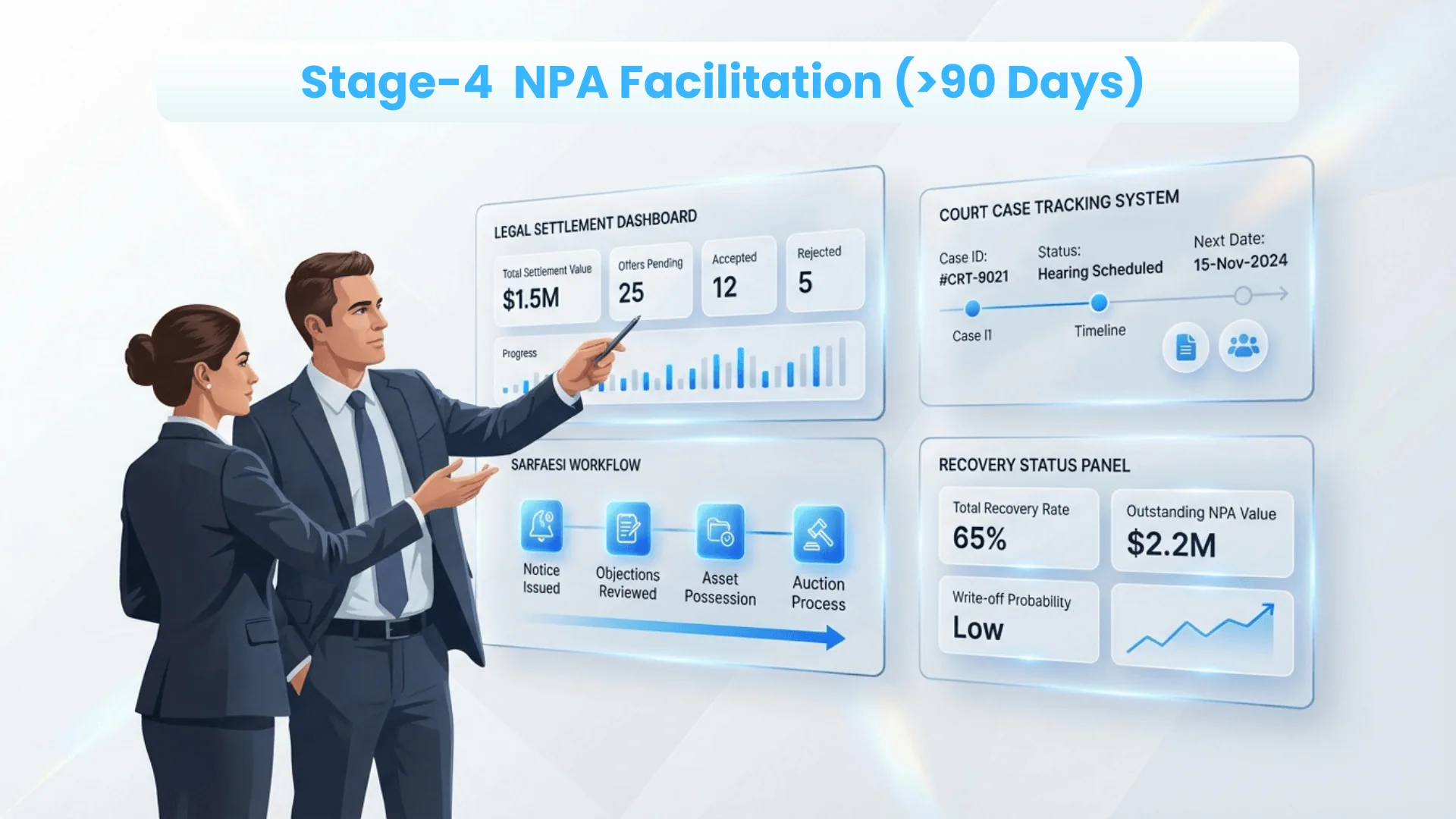
NPL facilitation — formal escalation
Demand notices, settlement negotiation and case handoff run as a configured workflow, logged chronologically for audit and internal legal review.
12 years of CRM delivery behind every collections deployment, and a bench of certified domain experts to run the rollout.
Enterprises benefitting from our cutting-edge solutions




Rethinking Collections in Indonesian Banking
Operational strain, a tightened consumer-protection regime, and a borrower base reshaped by fintech lending, and the CRM, AI, and agentic-AI operating model that answers all three.
- Where OJK consumer-protection rules reshape recovery practice
- How fintech lending changed the delinquent borrower profile
- The CRM and agentic-AI operating model for collections teams
Key benefits for Indonesian banks
Route optimisation and proximity-based account surfacing cut travel time across Jakarta, Surabaya and Medan, more visits per agent per day, whether recovery sits in-house or with an appointed partner.
Accounts map to agents by branch code across your whole network, so borrowers are contacted in Bahasa Indonesia, or the regional language their branch actually uses.
Every call, message and visit is time-stamped and logged, giving your compliance team an exportable trail for OJK reporting and internal review.
Scale recovery infrastructure with NPL volume instead of provisioning for peak, and keep customer data inside the boundary your regulator expects.
Mastering delinquency with an AI-powered collections solution
Dynamic risk bucketing and intelligent prioritisation
Move past flat DPD tracking. Overdue accounts segregate into granular buckets of 0–30, 31–60, 61–90 and 90+ DPD, using real-time data pulled from your core banking system. Payment patterns, location and propensity models separate situational defaulters from strategic ones, so aggressive recovery effort is spent only where it changes the outcome and cost-to-collect drops on the rest of the book.
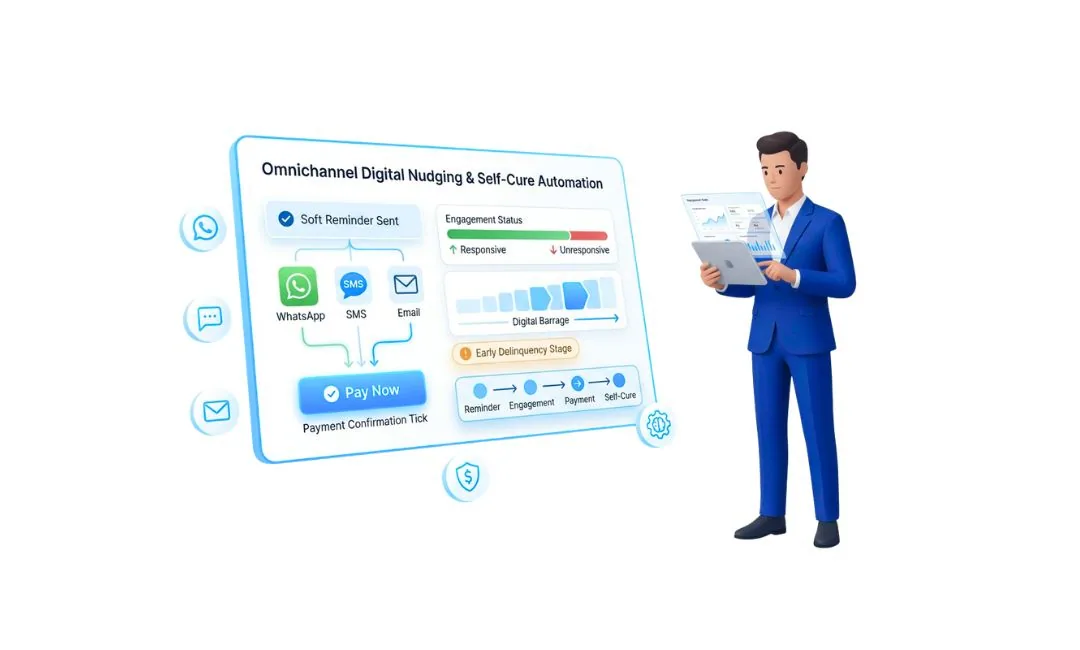
Omnichannel nudging and self-cure automation
WhatsApp is where Indonesian borrowers already are. The first line of contact runs there, plus SMS and email, as non-coercive reminders carrying a payment link for instant reconciliation. If the borrower stays unresponsive, frequency and tone shift through a configured sequence, so persistence costs no agent time and your team stays on the complex accounts.
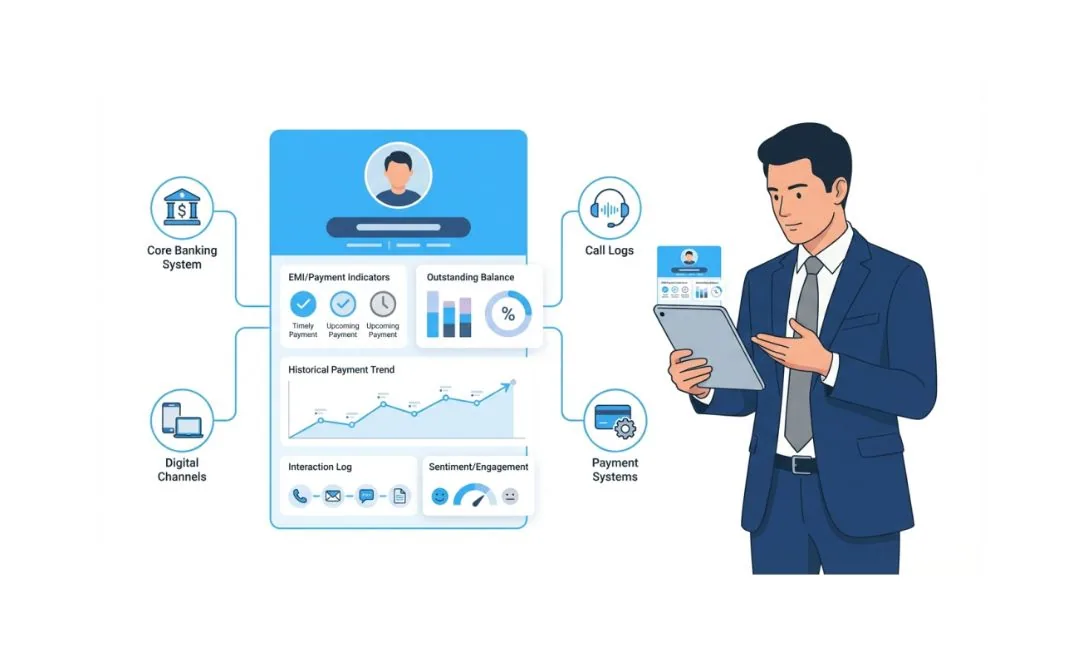
Borrower 360°: unified recovery intelligence
One screen instead of five. Instalment due, total outstanding and historical payment trend come straight from your CBS; every interaction log and sentiment note sits alongside them. Agents open the call already informed, which shortens research time and lifts first-call resolution, and keeps the conversation compliant and respectful.
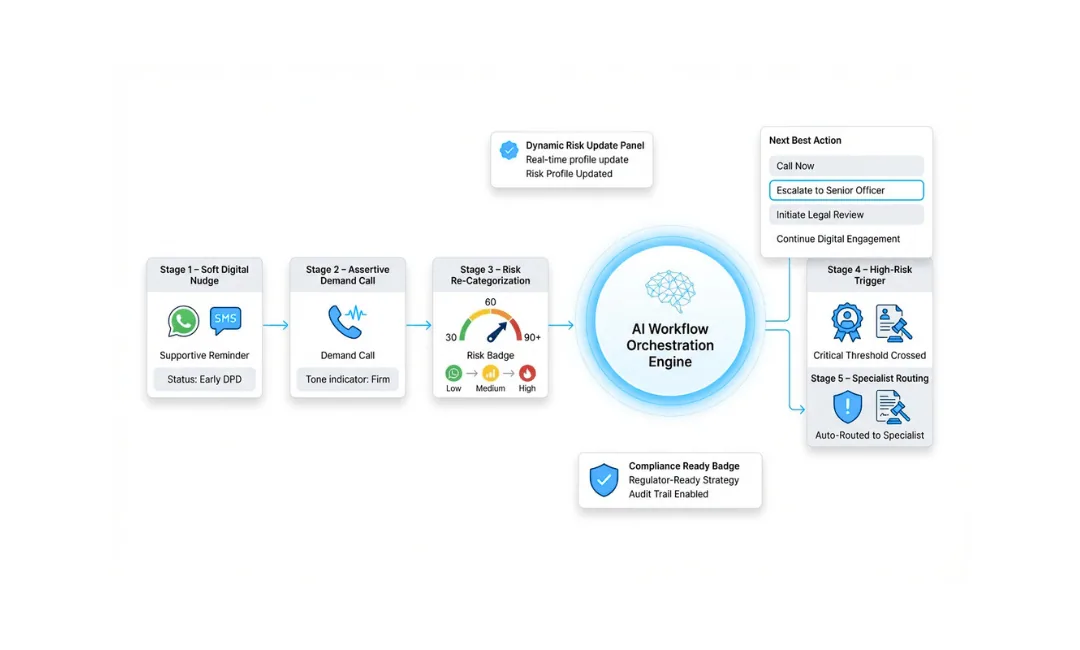
AI-powered "next best action" orchestration
A workflow engine drives journeys that adapt as an account ages: soft nudges give way to demand calls, risk profiles re-categorise as DPD thresholds are crossed, and high-risk triggers route straight to senior recovery or legal. Nothing sits in a queue because someone forgot, and every step follows a path your compliance team signed off in advance.
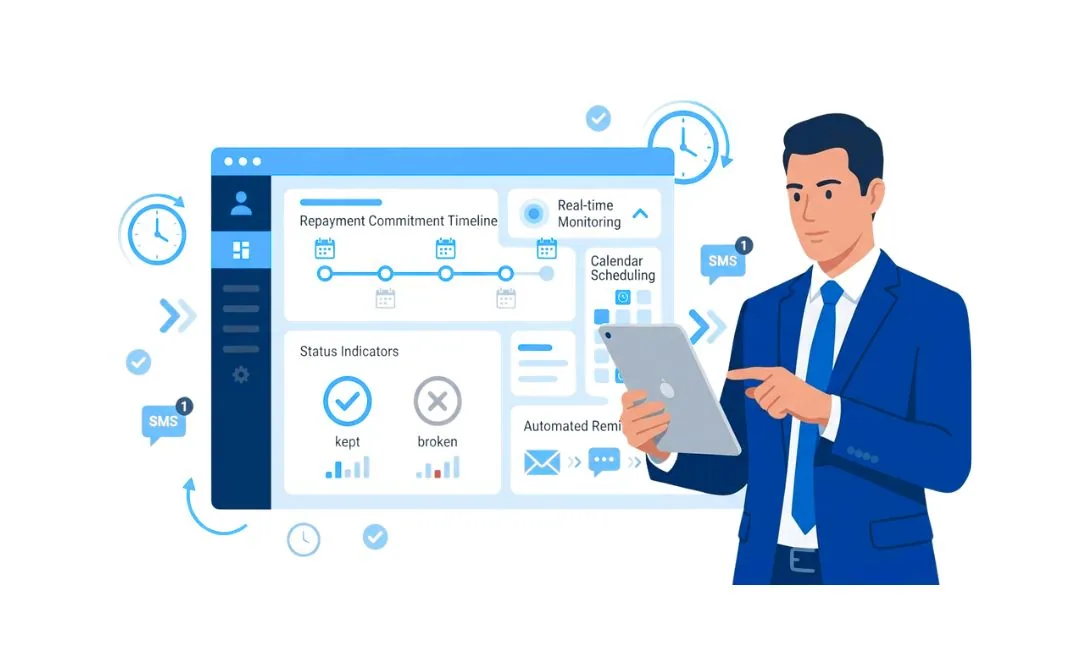
Automated promise-to-pay lifecycle
When a borrower commits to a date, the system captures the amount, schedules multi-channel reminders ahead of it, and watches the payment gateway to mark the promise kept or broken. A broken promise triggers high-priority follow-up immediately, turning verbal commitments into cash flow instead of a note someone meant to check.
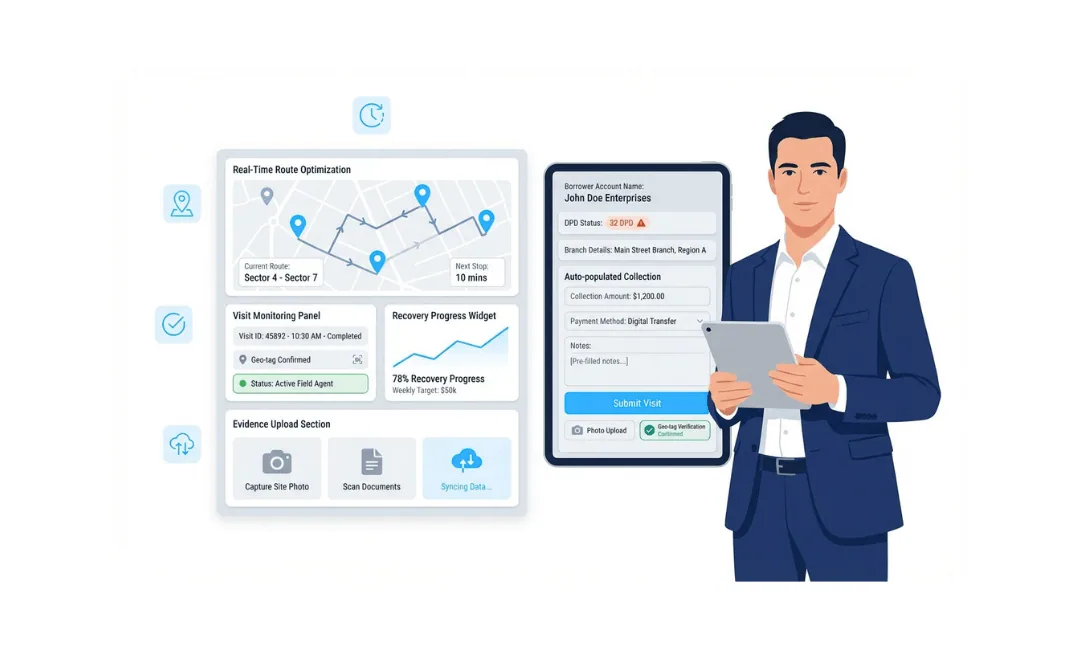
Field force command and mobile execution
The mobile app bridges the branch and the doorstep. Agents get optimised routes and collection forms pre-filled with account name, DPD status and branch detail. Visits are time-stamped and geo-tagged, so the command centre sees activity and outcomes live, and photos or documents upload from the field on the spot.
Strategic value and enterprise benefits
Optimise collection cost
Scale recovery capacity as delinquency volume moves, and put automation where call-centre overhead sits today.
Recovery advisors on the account
Regular strategic reviews on delinquency trends, portfolio health and regulatory change, with a team already running OJK-compliant workflows in Indonesia.
Economy of scale in recovery
The same workflows carry a growing book, from first missed instalment to formal escalation, without adding headcount per thousand accounts.
Augmented agent performance
Next-best-action guidance and Borrower 360° mean less research per call and a clearer path on every account an agent opens.
Low initial investment
Start with a scoped pilot on one portfolio slice, prove the recovery lift, then widen, flexible pricing, no upfront platform rebuild.
Frequently asked questions
How does the system handle different DPD buckets?
Accounts categorise automatically into 1–30, 31–60, 61–90 and 90+ DPD. Each bucket carries its own configured workflow, digital nudging early, mandatory field visits or formal notices later, and accounts move between them as the data updates.
Can we set the communication tone per bucket, in Bahasa Indonesia?
Yes. Early-stage messaging can stay supportive and self-cure oriented; later buckets shift to a firmer, demand-oriented template. Templates are yours to author per language, per product and per bucket.
How does it support OJK compliance and data residency?
Contact windows, permitted channels and escalation steps are configured to the rules your compliance team applies, and enforced by the workflow rather than by agent discretion. Every call, message and visit is time-stamped and exportable. Deployment can be on-premises, sovereign cloud or air-gapped so data stays in-country. We already build and run OJK-compliant workflows for an Indonesian insurance client.
How are promise-to-pay commitments managed?
Agents record the commitment and amount; the system reminds the borrower ahead of the date, then marks the promise kept or broken from payment data, escalating immediately when it breaks.
Does it integrate with our core banking system?
Yes, API integration pushes overdue instalment data from your CBS into the platform in near real time, so agents work from current outstanding amounts and due dates. Exact scope depends on your specific CBS and is walked through before any commitment.
What happens at 90+ DPD?
The account enters a formal escalation workflow, demand notice, settlement negotiation, or handoff for further action, orchestrated chronologically and fully logged. The specific legal steps are configured to Indonesian requirements with your legal team during setup.
Let's build a smarter recovery pipeline together.
A 30-minute session on your own collections queue, your portfolio, or an anonymised slice of it, run against the platform.